




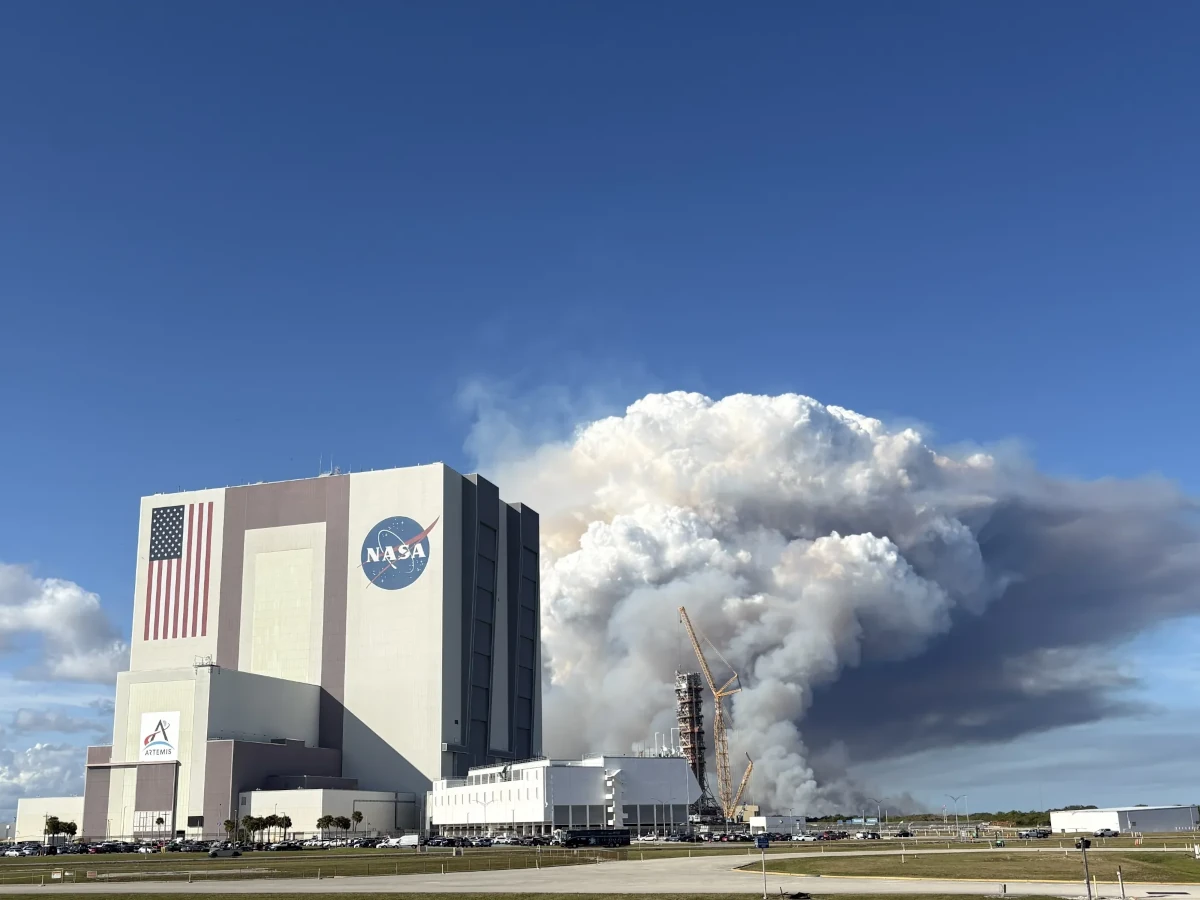
Anyone who has seen a launch at NASA’s Kennedy Space Center in Florida knows the agency’s pursuit of the stars involves some smoke and fire. Sometimes, however, the smoke doesn’t come from the rockets that propel astronauts beyond Earth’s bounds.
That was the case during the second weekend of January 2026, when NASA teamed up with the U.S. Fish and Wildlife Service and commercial space partners to intentionally ignite around 2,600 acres of scrub habitat at NASA Kennedy during an active launch countdown, a first for the busiest spaceport in the world.
Staff from NASA Kennedy’s Spaceport Integration Directorate oversaw two prescribed burns conducted by the Service. The larger burn affected around 1,400 acres on the northeast corner of the center, known as Happy Creek — a key habitat for the federally protected Florida scrub-jay and other wildlife that rely on periodic wildfires to thrive.
The other prescribed burn affected a 1,200-acre section east of Kennedy Parkway and south of the center’s industrial zone, near the spaceport’s seven-story headquarters building, as well as iconic facilities critical to NASA’s past and future space efforts like the Neil A. Armstrong Operations and Checkout Building and the Space Systems Processing Facility.
Historically, the center paused launch operations when using fire as a land management tool within NASA Kennedy’s secure area or the Merritt Island National Wildlife Refuge, which surrounds it. However, with Kennedy’s spaceport surpassing 100 successful liftoffs for the first time in 2025, and with the launch cadence expected to continue climbing in the years to come, officials at both agencies recognized the need to adapt.
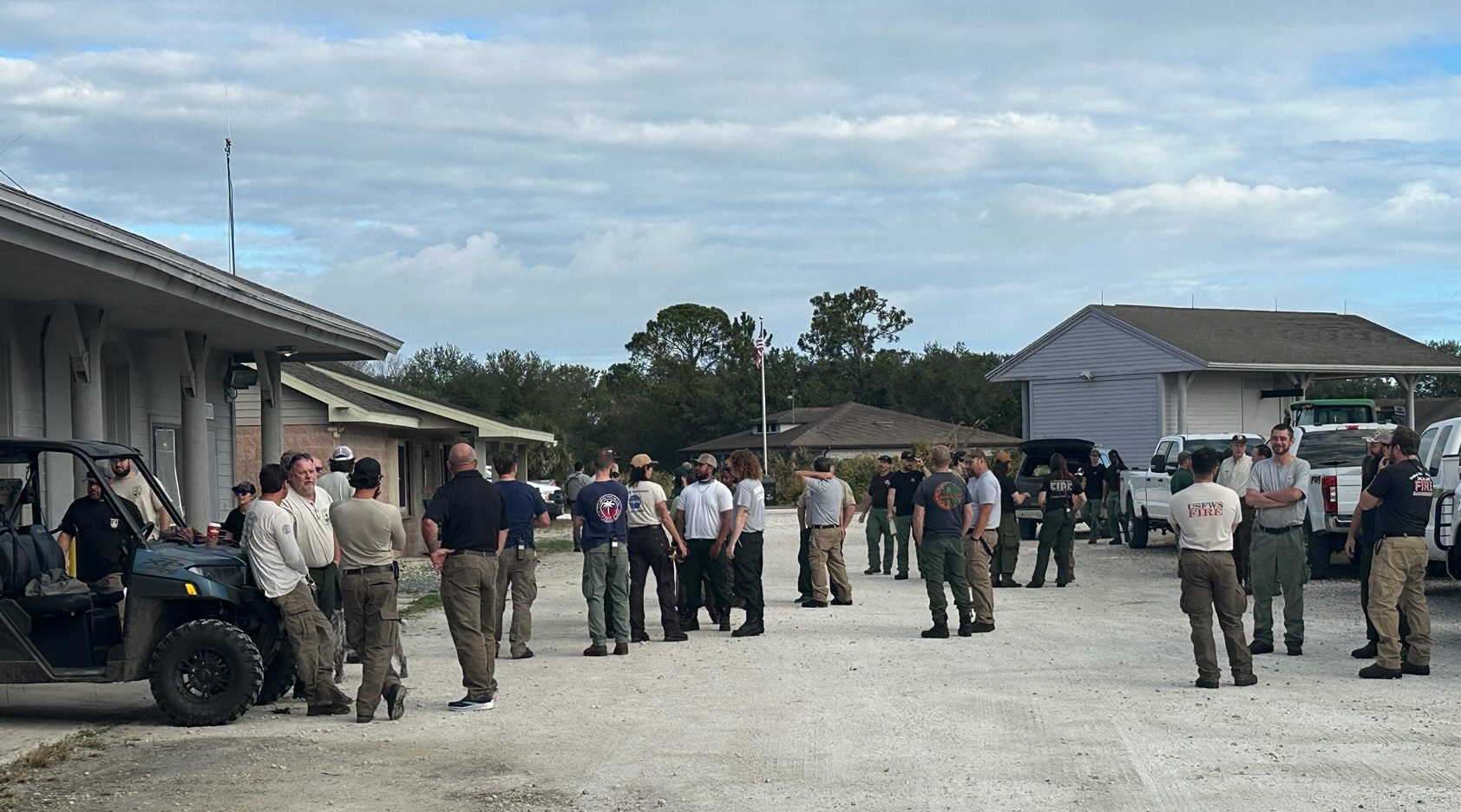
NASA and U.S. Fish and Wildlife Service personnel gather at the United States Fish and Wildlife Service off A. Max Brewer Memorial Parkway on Friday, Jan. 9, 2026, in Titusville, Florida to finalize the plan prior to the prescribed burn.
NASA/Tim Kozusko
“As more launches occur at Kennedy, the need for proper land management at the refuge has never been greater,” said Greg Gaddis, the center’s senior operations manager for the spaceport. “We must find new ways to lessen the amount of fire fuel on the ground while also keeping pace with the launch needs of our government and commercial partners. Otherwise, an unexpected lightning bolt or some other fire-starter could be catastrophic for America’s space ambitions, as well as the private space industry.”
The increasing launch cadence is one of many factors the prescribed burn manager — also known as the burn boss — must consider when deciding when and where to conduct a prescribed burn at the spaceport. Another critical factor is weather conditions, especially during Florida’s dry season, where constant breeze from the nearby Atlantic Ocean can quickly turn a small fire into a large one. This could potentially pose a significant risk to plant and animal species at the refuge, as well as to the center’s launch infrastructure.
Safety remains the paramount concern. The center’s Space Operations Office worked directly with the Service and the launch mission partners during the burn.
Prior to the Service setting prescribed burns with air and land resources, Kennedy officials reviewed forecasted wind patterns and developed plans to protect workers in buildings affected by the smoke. The center issued smoke warnings, temporarily relocated some personnel, and allowed others to work remotely during the burns. The smoke also caused intermittent closures of some of the center’s main roads and entrances throughout the weekend for safety reasons.
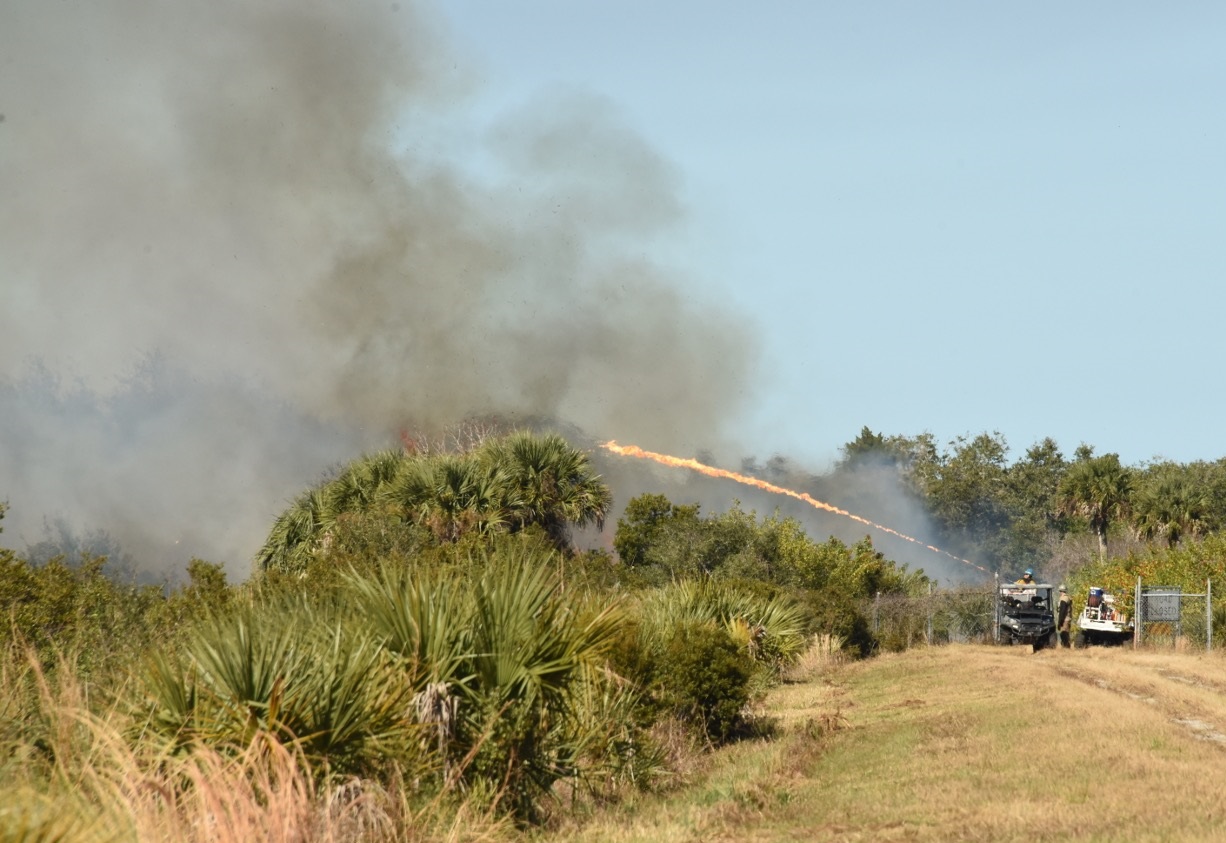
Torches mounted onto vehicles are used to intentionally set over 2,600 acres of the Merritt Island National Wildlife Refuge on fire on Friday, Jan. 9, 2026. Those areas are located inside Kennedy Space Center’s restricted area and occurred during an active launch countdown, the first time that’s ever happened at NASA Kennedy.
NASA/Tim Kozusko
“To do is to learn, and we all learn each day,” said Shawn Sullivan, assistant fire management officer for the Service’s Region 4 and the designated burn boss. “I stood in awe of the people working around me. To listen to the coordination between specialized groups and witness great individual effort was quite an experience.”
Conducting prescribed burns every two or three years is optimal for maintaining the health and resilience of the refuge, especially for wildlife like the Florida scrub-jay, which has adapted to periodic fires. Determining when and where to conduct these burns is one of the most challenging parts for the burn boss and the officials responsible for operating the spaceport. The amount of vegetation in those areas is often a deciding factor when choosing what to burn.
“We want to make sure those areas don’t get clogged up, making it more difficult for firefighters to gain access if they have to protect launch pads or any other infrastructure from a wildfire,” Gaddis added. “It also leaves less fuel a wildfire can use to grow, and that’s always a big help for first responders working to put a fire out.”
About The Author


Got a Questions?
Find us on Socials or Contact us and we’ll get back to you as soon as possible.