
NASA
-
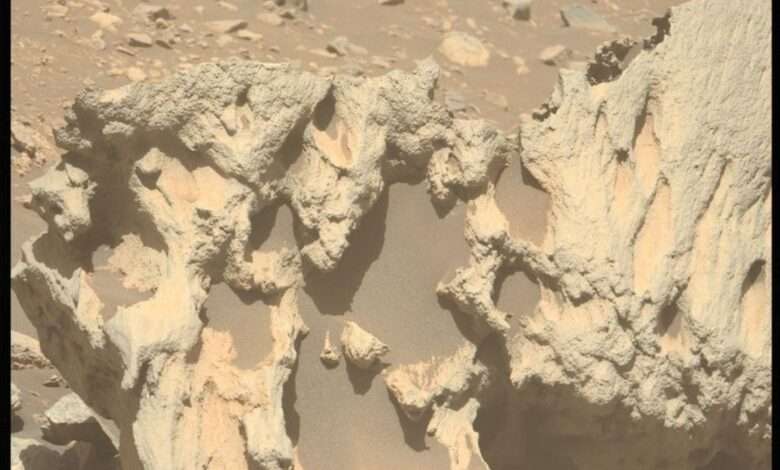
A Stranger in Our Midst?
Written by Candice Bedford, Research Scientist at Purdue University Oct. 1, 2025 During the rover’s recent investigation of the bedrock at “Vernodden,” Perseverance encountered an unusually shaped rock about 80 centimeters across (about 31 inches) called “Phippsaksla.” This rock was identified as a target of interest based on its sculpted, high-standing appearance that differed from that of the low-lying, flat…
Read More » -
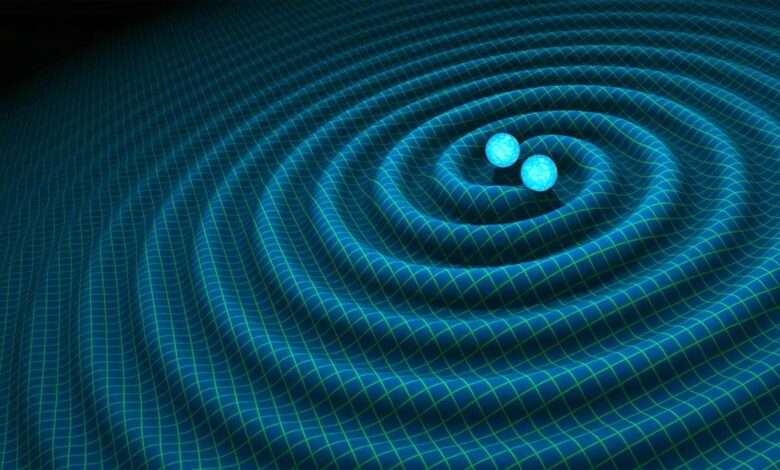
October’s Night Sky Notes: Let’s Go, LIGO!
by Kat Troche of the Astronomical Society of the Pacific September 2025 marks ten years since the first direct detection of gravitational waves as predicted by Albert Einstein’s 1916 theory of General Relativity. These invisible ripples in space were first directly detected by the Laser Interferometer Gravitational-Wave Observatory (LIGO). Traveling at the speed of light (~186,000 miles per second), these…
Read More » -

NASA, International Partners Deepen Commitment to Artemis Accords
NASA, along with leaders from global space agencies and government representatives worldwide, convened on Monday to further the implementation of the Artemis Accords — practical principles designed to guide the responsible exploration of the Moon, Mars, and beyond. The meeting was held during the 76th International Astronautical Congress (IAC) taking place in Sydney. In opening remarks, acting NASA Administrator Sean…
Read More » -
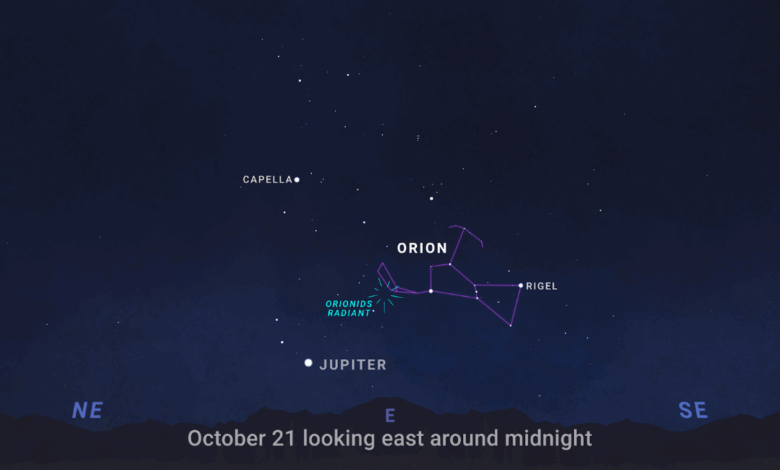
What’s Up: October 2025 Skywatching Tips from NASA
A supermoon, and meteor showers from the Draconids and Orionids A supermoon takes over the sky, the Draconid meteor shower peeks through, and the Orionid meteor shower shines bright. Skywatching Highlights Oct. 6: The October supermoon Oct. 6-10: The Draconid meteor shower Oct. 21: The Orionid meteor shower peaks (full duration Sept. 26 – Nov. 22) Transcript What’s Up for…
Read More » -

Helio Highlights: October 2025
The Sun and Our Lives On a clear night, you might see thousands of stars in the sky. Most of these stars are dozens or hundreds of light years away from us. A light year is the distance a beam of light travels in a year: about 5.88 trillion miles (9.46 trillion kilometers). This means that for those stars we see at…
Read More » -
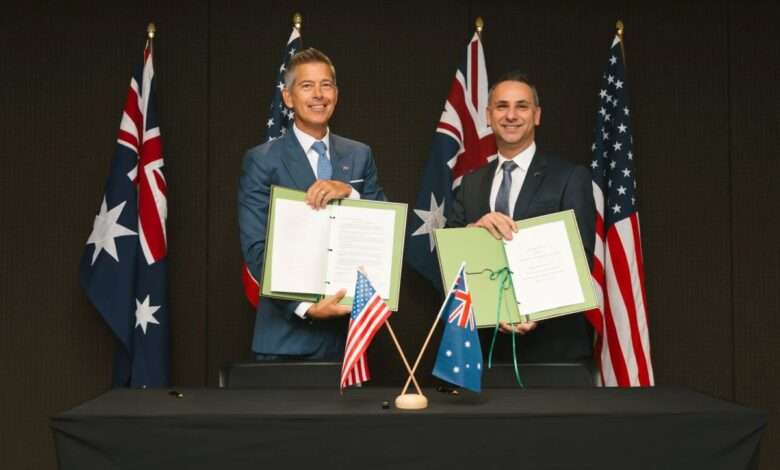
NASA signs US-Australia Agreement on Aeronautics, Space Cooperation
At the International Astronautical Congress (IAC) taking place in Sydney this week, representatives from the United States and Australia gathered to sign a framework agreement that strengthens collaboration in aeronautics and space exploration between the two nations. Acting NASA Administrator Sean Duffy and Australian Space Agency Head Enrico Palermo signed the agreement Tuesday on behalf of their countries, respectively. “Australia…
Read More » -
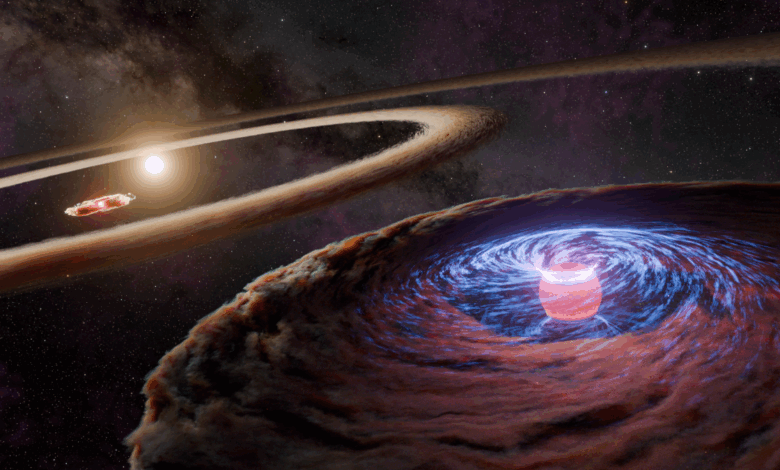
Discovery Alert: ‘Baby’ Planet Photographed in a Ring around a Star for the First Time!
The (Proto) Planet: WISPIT 2b The Discovery: Researchers have discovered a young protoplanet called WISPIT 2b embedded in a ring-shaped gap in a disk encircling a young star. While theorists have thought that planets likely exist in these gaps (and possibly even create them), this is the first time that it has actually been observed. This image of the WISPIT…
Read More » -
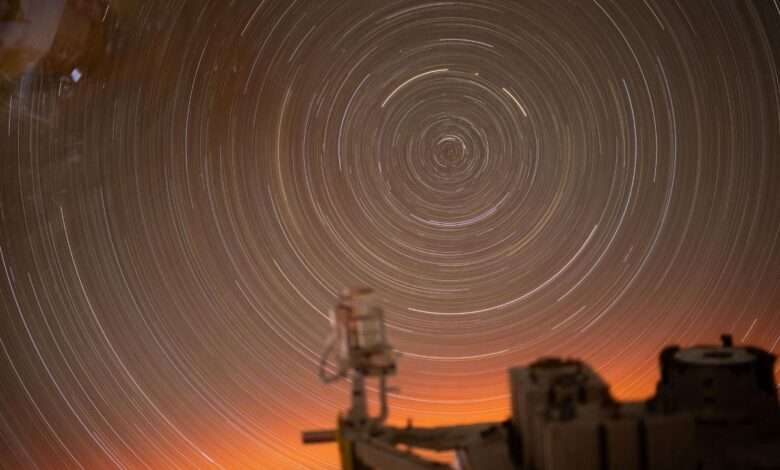
International Space Station: Launching NASA and Humanity into Deep Space
Curiosity and the desire to explore are traits deeply rooted in human nature. Space exploration is no exception; it reflects humanity’s timeless drive to seek new horizons, challenge our limits, and understand our universe. The advancements of modern civilization—from the electricity that powers our homes to basic hygienic breakthroughs that ensure our health— happened thanks to humanity’s dedication to expanding…
Read More » -
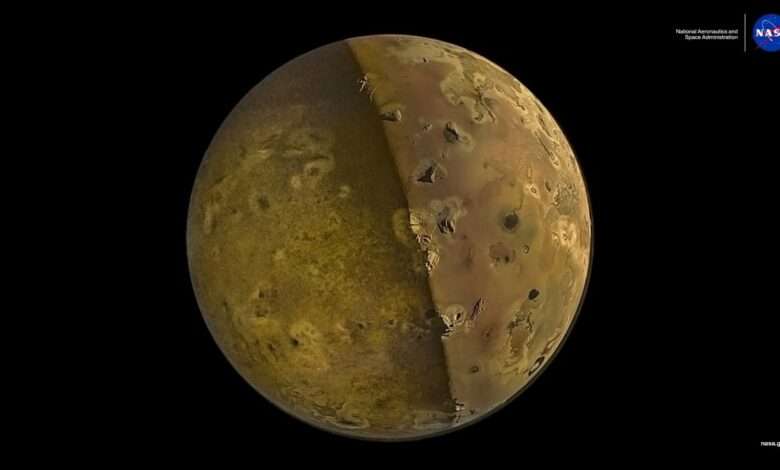
Jupiter’s Volcanic Moon Io
During its close flyby of Jupiter’s moon Io on December 30, 2023, NASA’s Juno spacecraft captured some of the most detailed imagery ever of Io’s volcanic surface. In this image, taken by the JunoCam instrument from about 930 miles (1,500 kilometers) above the moon, Io’s night side [left lobe] is illuminated by “Jupitershine,” which is sunlight reflected from the planet’s surface. This…
Read More » -
OSDR and PSI Unveil New Consolidated Website
The Open Science Data Repository (OSDR) and Physical Sciences Informatics (PSI) has a new home. As part of NASA’s website consolidation initiative, the OSDR and PSI site have officially transitioned to the Biological and Physical Sciences (BPS) Data page, accessible through the “Data” menu on the Science Mission Directorate’s (SMD) website at science.nasa.gov. This strategic move reflects NASA’s broader effort to streamline user access to resources,…
Read More »