
NASA
-
NASA
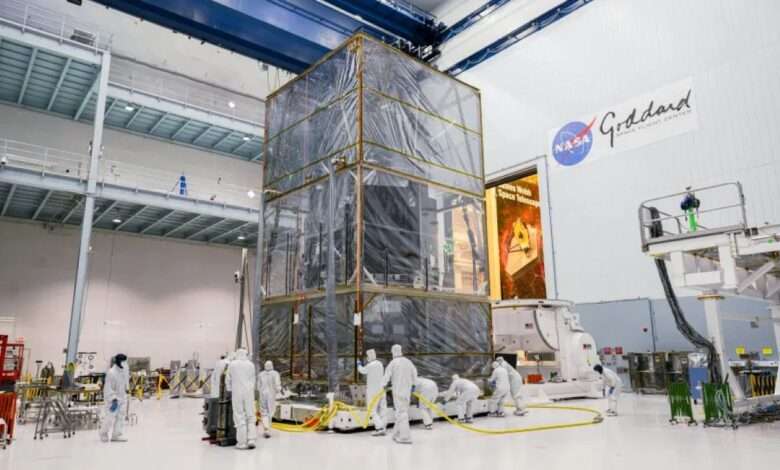
NASA’s Roman Observatory Passes Final Major Prelaunch Tests
NASA’s Nancy Grace Roman Space Telescope team recently blasted the observatory with extreme sound, shook it, and listened to its electronic hum. Roman passed all three assessments, which aimed to confirm that the observatory will withstand launch conditions and function as expected in space. The achievement keeps the mission on track for launch as early as this fall. “All of…
Read More » -
NASA
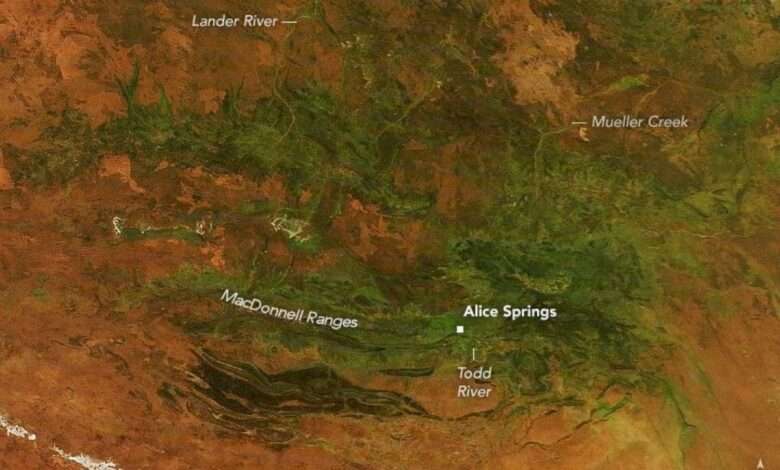
Australia’s “Red Centre” Turns Green
The town of Alice Springs lies near Australia’s geographic center, in a region often called the “Red Centre” for the rusty hue of its desert landscape. After weeks of heavy rainfall in February and March 2026, however, vast areas of desert and surrounding mountains turned lush and green. The MODIS (Moderate Resolution Imaging Spectroradiometer) on NASA’s Terra satellite captured this image (right) of the…
Read More » -
NASA
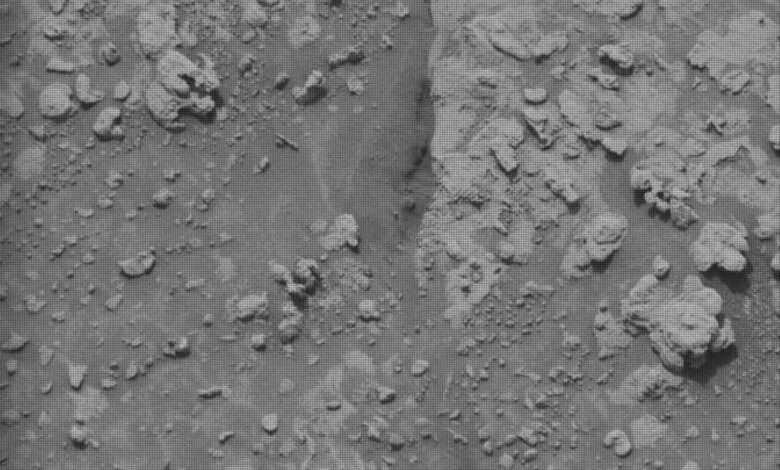
Curiosity Blog, Sols 4832–4837: Driving the (Contact) Line!
Written by Catherine O’Connell-Cooper, APXS Strategic Planner and Payload Uplink/Downlink Lead, University of New Brunswick, Canada Earth planning date: Friday, March 13, 2026 We are in our final phase of the boxwork campaign, investigating the contacts between the boxwork unit and the layered sulfate unit. As my colleague Bill reported here, last week we crossed out of the boxwork unit back into…
Read More » -
NASA
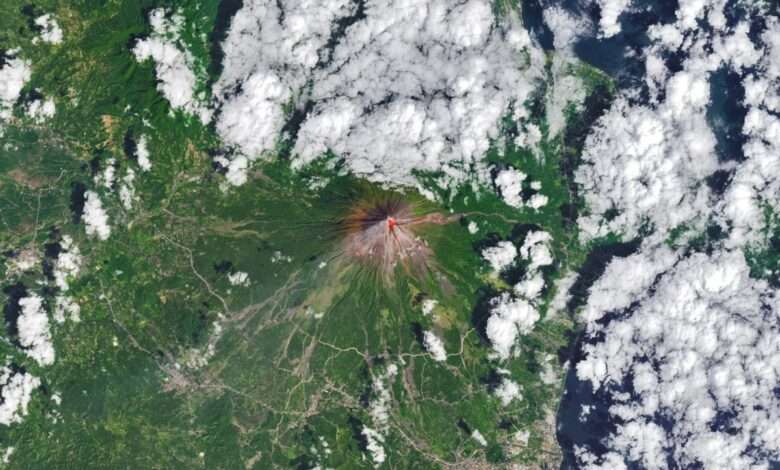
Lava Flows Down Mayon
The OLI (Operational Land Imager) on Landsat 8 acquired this rare, relatively clear image of Mayon, the most active volcano in the Philippines, on Feb. 26, 2026. The natural-color scene is overlaid with infrared observations to highlight the lava’s heat signature. On that day, the Philippine Institute of Volcanology and Seismology (PHIVOLCS) reported volcanic earthquakes, rockfalls, and hot clouds of ash and debris called pyroclastic flows. Along…
Read More » -
NASA
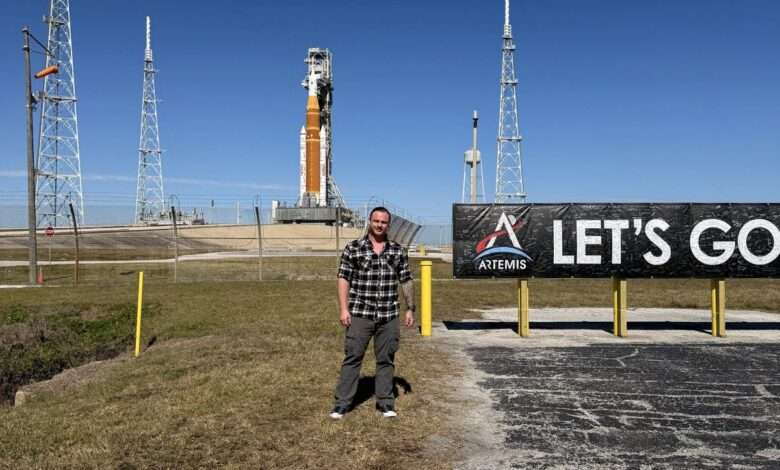
From Service to Space Systems: A Pathways Journey to NASA
For Corey Elmore, the path to NASA’s Kennedy Space Center did not begin in engineering. It began in service. Today he serves as a NASA Pathways engineering intern in the Technical Processes and Tools Branch (KSC-NE-TA) at Kennedy Space Center. Through the Pathways program, he is gaining hands-on experience supporting the engineering environments, technical tools and processes that help NASA…
Read More » -
NASA
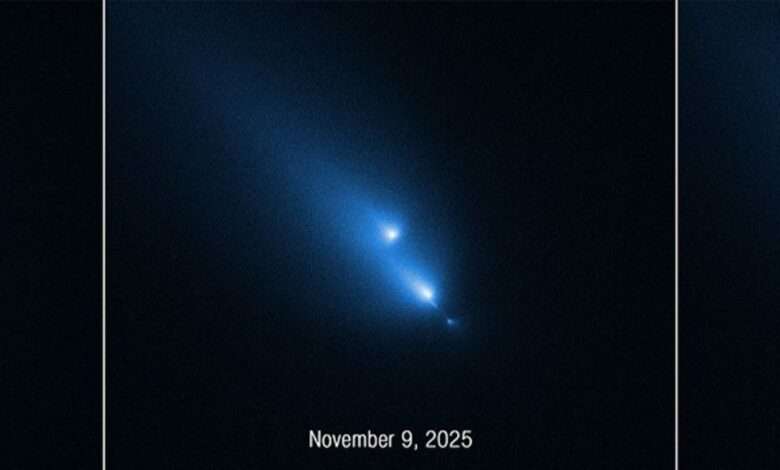
NASA’s Hubble Unexpectedly Catches Comet Breaking Up
In a happy twist of fate, NASA’s Hubble Space Telescope just witnessed a comet in the act of breaking apart. The chance of that happening while Hubble watched is extraordinarily minuscule. The findings published Wednesday in the journal Icarus. The comet K1, whose full name is C/2025 K1 (ATLAS)—not to be confused with interstellar comet 3I/ATLAS—was not the original target of the Hubble…
Read More » -
NASA
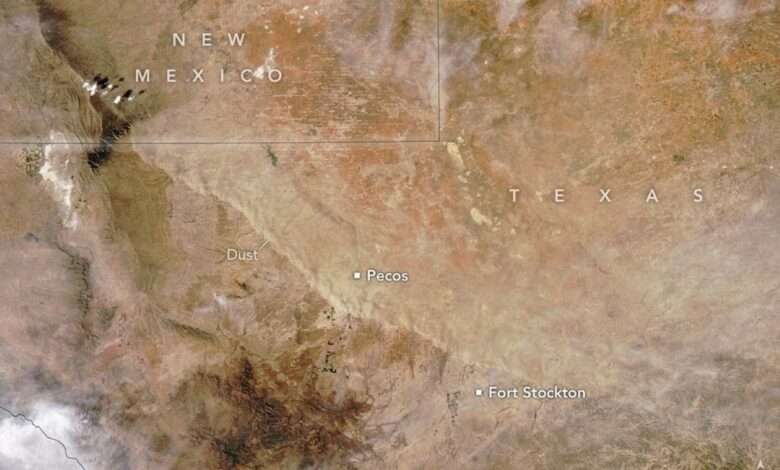
Wave of Dust Rolls Through Texas
The Ides of March brought perilous weather to West Texas and the state’s Panhandle. A strong cold front blasted south across the arid plains on March 15, 2026, bringing stiff winds that stirred up a curtain of dust. The cloud of suspended particles slashed visibility and made for treacherous travel as it swept across the region. The high winds, coupled with dry…
Read More » -
NASA
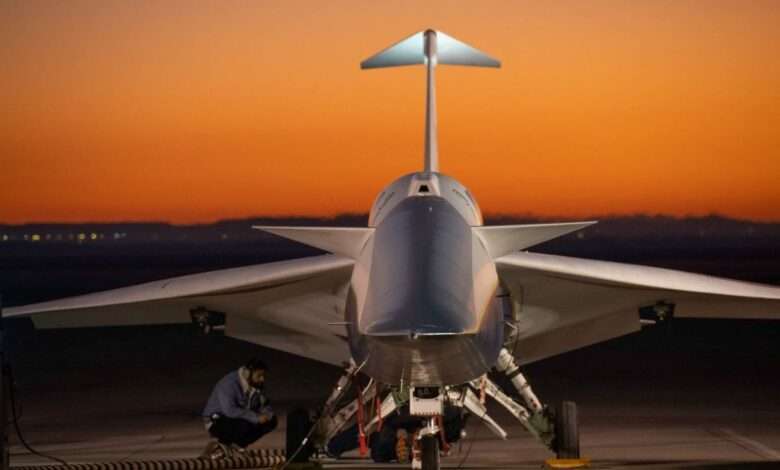
NASA’s X-59 Prepares for Second Flight
NASA’s X-59 experimental aircraft is preparing for its second flight, a step that will set the pace for more flight testing in 2026. Over the coming months, NASA will take the quiet supersonic jet faster and higher, while validating safety and performance, a process known as envelope expansion. NASA test pilot Jim “Clue” Less will be at the X-59’s controls for second flight. Less…
Read More » -
NASA
Dim Delights in Cancer
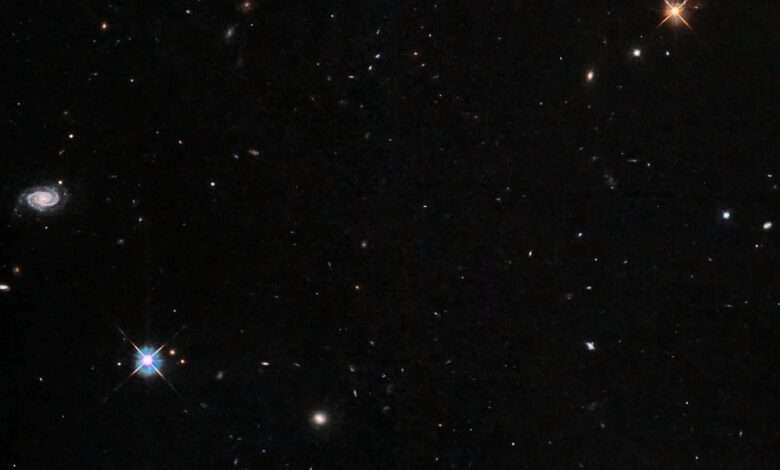
Cancer the Crab is a dim constellation, yet it contains one of the most beautiful and easy-to-spot star clusters in our sky: the Beehive Cluster. Cancer also possesses one of the most studied exoplanets: the superhot super-Earth, 55 Cancri e. Find the M44, the Beehive Cluster, at the center of the Cancer constellation, using nearby stars such as Regulus in Leo,…
Read More » -
NASA
Solving Asteroid Bennu’s Mysteries
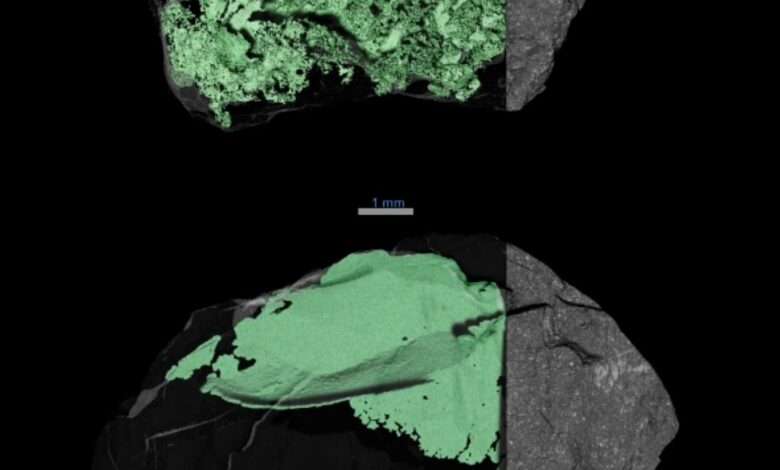
These X-ray computed tomography (XCT) scans released on March 17, 2026, give us a glimpse inside asteroid Bennu. They show the most common types of crack networks observed in Bennu samples; these networks solved a mystery that baffled NASA for years. When NASA’s OSIRIS-REx spacecraft first approached asteroid Bennu in 2018, scientists expected to see smooth, sandy beach-like surfaces. Instead, they found a celestial body covered…
Read More »