



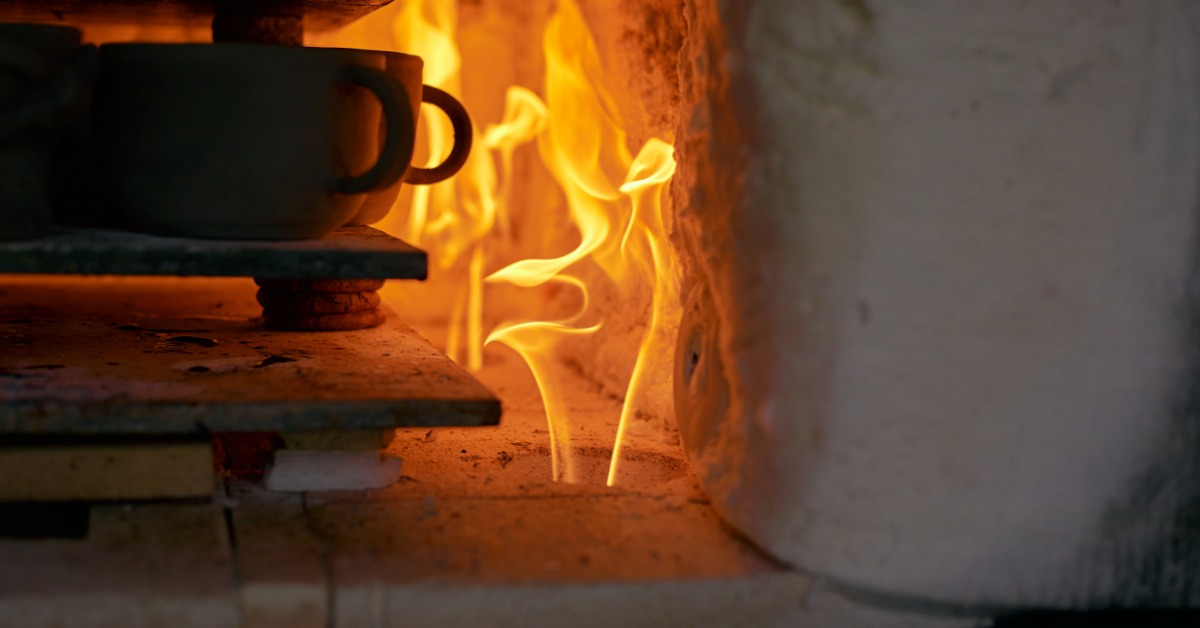
Ceramic firing depends on precise control. Small changes in temperature, atmosphere, heating rate, material preparation, or kiln loading can produce noticeable differences in the finished product. These differences can affect dimensions, density, strength, surface quality, and overall performance.
Manufacturers can improve consistency by treating ceramic firing as a repeatable process rather than a single heating step. Careful preparation before the kiln cycle begins often matters as much as the firing schedule itself. When teams control materials, equipment, loading practices, and process records, they build a stronger foundation for predictable ceramic results.
Control Raw Materials
Consistent firing starts with consistent materials. Variations in powder chemistry, particle size, moisture content, binder levels, or additives can influence how ceramic components shrink and densify during heating.
Teams should track incoming material specifications and store powders under controlled conditions. Humidity can affect some ceramic materials, especially when powders or prepared bodies sit in storage for extended periods.
Mixing also deserves careful attention. Operators should use consistent mixing times, equipment settings, and ingredient ratios. Uniform preparation helps ensure every batch responds to heat similarly.
When manufacturers use multiple raw material suppliers, they should also compare specifications closely. Two materials with the same general description can behave differently during firing due to subtle differences in purity or particle characteristics.
Standardize Green Body Preparation
The condition of a ceramic part before firing can strongly influence the final result. Uneven density, trapped air, inconsistent moisture, or dimensional variation can all lead to distortion during heating.
Pressing, casting, extrusion, and other forming methods require repeatable parameters. Operators should control pressure, fill weight, mold condition, and forming speed whenever applicable.
Green parts also require careful handling. Excessive pressure, rough handling, or improper stacking can create small defects that worsen during firing. Even minor cracks or density variations can become more visible after shrinkage.
Manufacturers should also monitor green dimensions. Stable dimensions before firing give teams a useful reference point when they evaluate shrinkage and final tolerances.
Refine the Firing Curve
The firing schedule determines how quickly components heat, how long they remain at critical temperatures, and how they cool afterward. A carefully developed schedule can reduce thermal stress and improve batch-to-batch repeatability.
Heating too quickly can create temperature gradients throughout a ceramic component. Thick sections may respond differently than thin sections, which can contribute to cracking, warping, or uneven densification.
Hold times can also influence performance. Some processes need a controlled soak period, so heat reaches the entire part and reactions progress evenly.
Manufacturers working with alumina may closely monitor sintering profiles to ensure alumina plate flatness because heating rates, peak temperatures, soak times, and cooling behavior can all affect dimensional stability. A consistent firing curve provides operators with a reliable baseline for identifying changes in part quality.
Monitor Kiln Temperature
A kiln controller may display a single temperature, but different areas inside the chamber can experience varying thermal conditions. These variations can create inconsistencies among components fired in the same cycle.
Manufacturers should monitor temperature distribution throughout the kiln rather than relying on a single reading. Thermocouples, temperature indicators, and other monitoring tools can help teams identify hot or cold spots.
Regular calibration also supports reliable temperature control. Sensors can drift over time, and even a small measurement error can alter firing results when a ceramic process operates within a narrow temperature window.
Teams should compare recorded kiln temperatures with finished part results. That connection can reveal patterns that operators might otherwise overlook.
Load the Kiln Carefully
Kiln loading affects heat flow. Parts packed too closely together can interrupt circulation, while inconsistent placement can expose similar components to different heating conditions.
Operators should use repeatable loading patterns whenever production allows. Consistent spacing gives heat more predictable paths through the kiln chamber.
Part orientation also deserves attention. Thin plates, long components, or complex shapes may respond differently depending on how workers position them during firing.
Teams should document successful loading configurations rather than leaving placement entirely to individual judgment. Clear loading procedures can reduce batch-to-batch variation and simplify training for new operators.
Use Stable Kiln Furniture
Kiln furniture supports ceramic components throughout the firing process, so shelves, setters, trays, and supports can influence final geometry.
Warped or damaged furniture can provide uneven support to the ceramic parts resting on it. A plate may enter the kiln flat but distort if the setter beneath it no longer provides a stable surface.
Manufacturers should regularly inspect kiln furniture and replace pieces showing excessive wear, cracking, or distortion. They should also clean surfaces that accumulate debris or residue.
The material of the kiln furniture can also influence performance. Different support materials react differently to heat and repeated thermal cycling, so manufacturers should choose furniture that suits both the ceramic body and the firing temperature.
Control the Kiln Atmosphere
Atmosphere can affect certain ceramic compositions during firing. Oxygen levels, humidity, contaminants, and gases released from binders can influence color, surface condition, chemical reactions, and densification.
Kilns that use controlled atmospheres require reliable gas flow and ventilation. Operators should monitor flow rates and maintain equipment that controls the firing environment.
Binder burnout deserves special attention. Organic binders require time and appropriate conditions to leave the ceramic body without causing defects. Heating too aggressively during this stage can trap gases or create internal pressure.
A controlled atmosphere also helps manufacturers separate true material problems from environmental changes inside the kiln.
Manage Cooling Rates
Manufacturers sometimes focus heavily on heating and peak temperature while giving less attention to cooling. Cooling can affect cracking, residual stress, dimensions, and microstructure.
Rapid cooling can create steep temperature differences between the surface and interior of a part. Large or thick components may need more gradual cooling to reduce stress.
Teams should treat cooling as part of the complete firing cycle. Controlled cooling also makes production easier to compare because operators don’t introduce unpredictable changes by opening the kiln too early or changing airflow from one batch to another.
Repeatable cooling conditions help manufacturers evaluate other process adjustments with greater confidence.
Maintain the Kiln
Even a well-developed firing schedule can’t compensate for poorly maintained equipment. Heating elements wear, thermocouples drift, seals deteriorate, and insulation can lose performance over time.
Routine maintenance helps the kiln deliver similar conditions from cycle to cycle. Operators should inspect components according to a regular schedule and record repairs or replacements.
Teams should also watch for changes in heating time. A kiln that suddenly takes longer to reach temperature may have aging elements or another developing problem.
Early maintenance can prevent small equipment changes from creating larger quality issues across several production batches.
Record Each Firing Cycle
Detailed records help manufacturers identify patterns. Operators should track temperatures, cycle times, batch information, kiln loading, material lots, part locations, and any unusual events.
Good records make troubleshooting more precise. If several parts develop the same dimensional problem, teams can compare recent firings and look for common changes.
Records also help manufacturers refine successful processes. When a firing cycle produces strong results, operators can repeat the conditions instead of relying on memory.
Digital tracking can make comparisons easier, but even a simple structured record can improve process control when teams use it consistently.
Build Repeatability Into Every Step
Ceramic firing consistency doesn’t come from one perfect temperature setting. It comes from controlling the many variables that influence how a ceramic body responds throughout the entire process.
Manufacturers can improve ceramic firing results by standardizing material preparation, refining firing schedules, monitoring kiln conditions, maintaining equipment, controlling loading patterns, and tracking finished part quality. Each improvement makes the process easier to understand and repeat.
When teams treat firing as a connected system, they gain more control over shrinkage, density, flatness, and overall part performance. That level of discipline helps reduce variation and gives manufacturers a dependable path toward more predictable ceramic production.
About The Author

Got a Questions?
Find us on Socials or Contact us and we’ll get back to you as soon as possible.